Nothing Lasts Forever
Every blade in the Warrens has a history. Nicks in the edge, stress fractures along the tang, a guard that wobbles just slightly. Now the game knows it too.
Wear and Tear
Equipment degrades. Every swing of a sword, every blow absorbed by a chestplate — there’s a chance it chips, dents, or cracks. When durability hits zero, the item breaks and unequips itself. No warning, no grace period. The Warrens don’t care about your favorite sword.
The system is probabilistic, not deterministic. A hit doesn’t always cost durability — it rolls against a chance that depends on the item’s rarity. Normal gear wears fastest, magic items hold up better, and rare equipment barely notices the abuse. It keeps combat fluid without turning every fight into an anxiety spiral about your gear.
Weapons degrade when you attack. Armor degrades when you take hits — head, chest, and legs each roll independently. Blocking with a shield? That shield takes the wear instead. It’s a quiet system, ticking away in the background while you fight, making every piece of loot a little more precious and every encounter a little more costly.
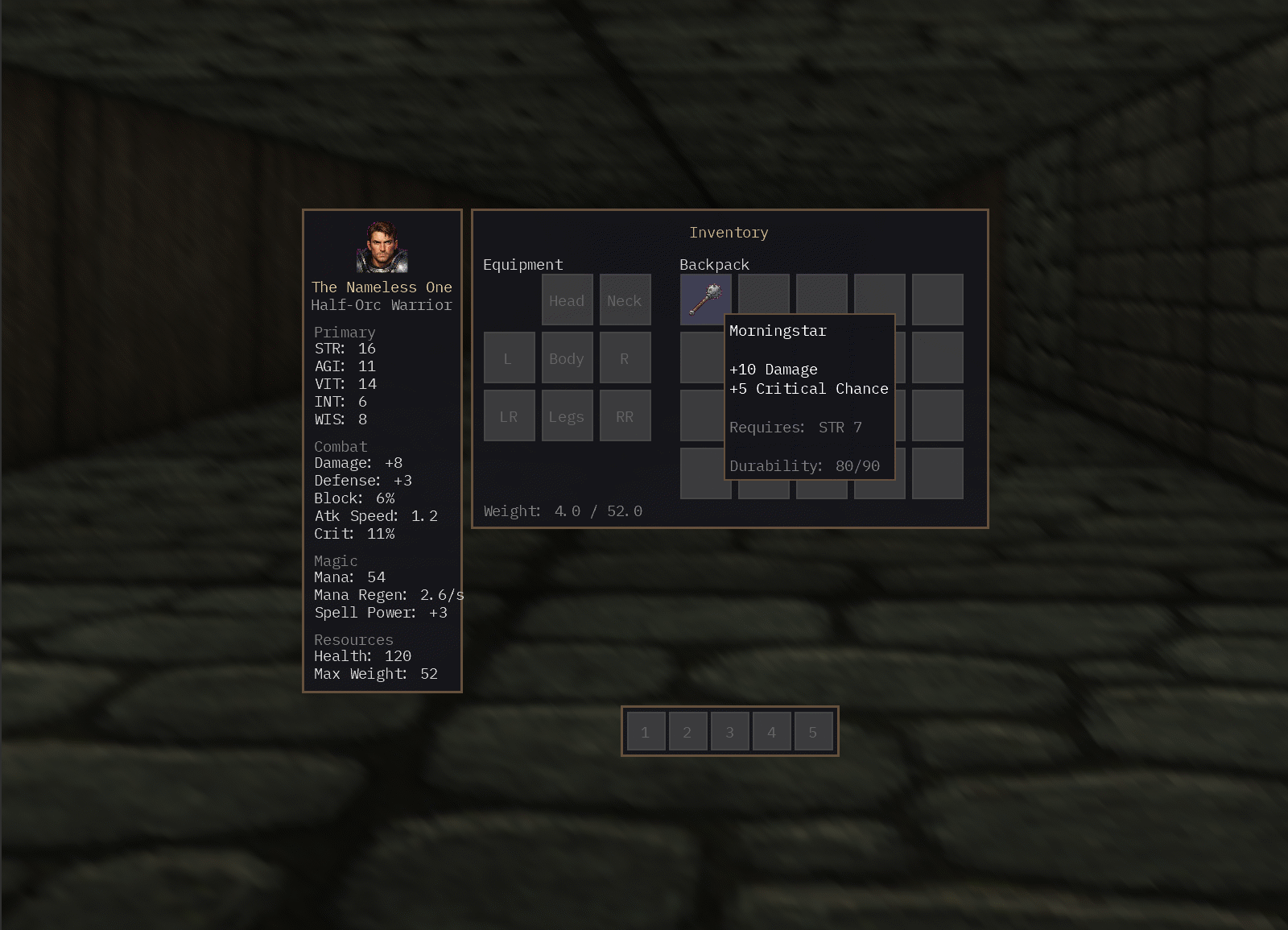
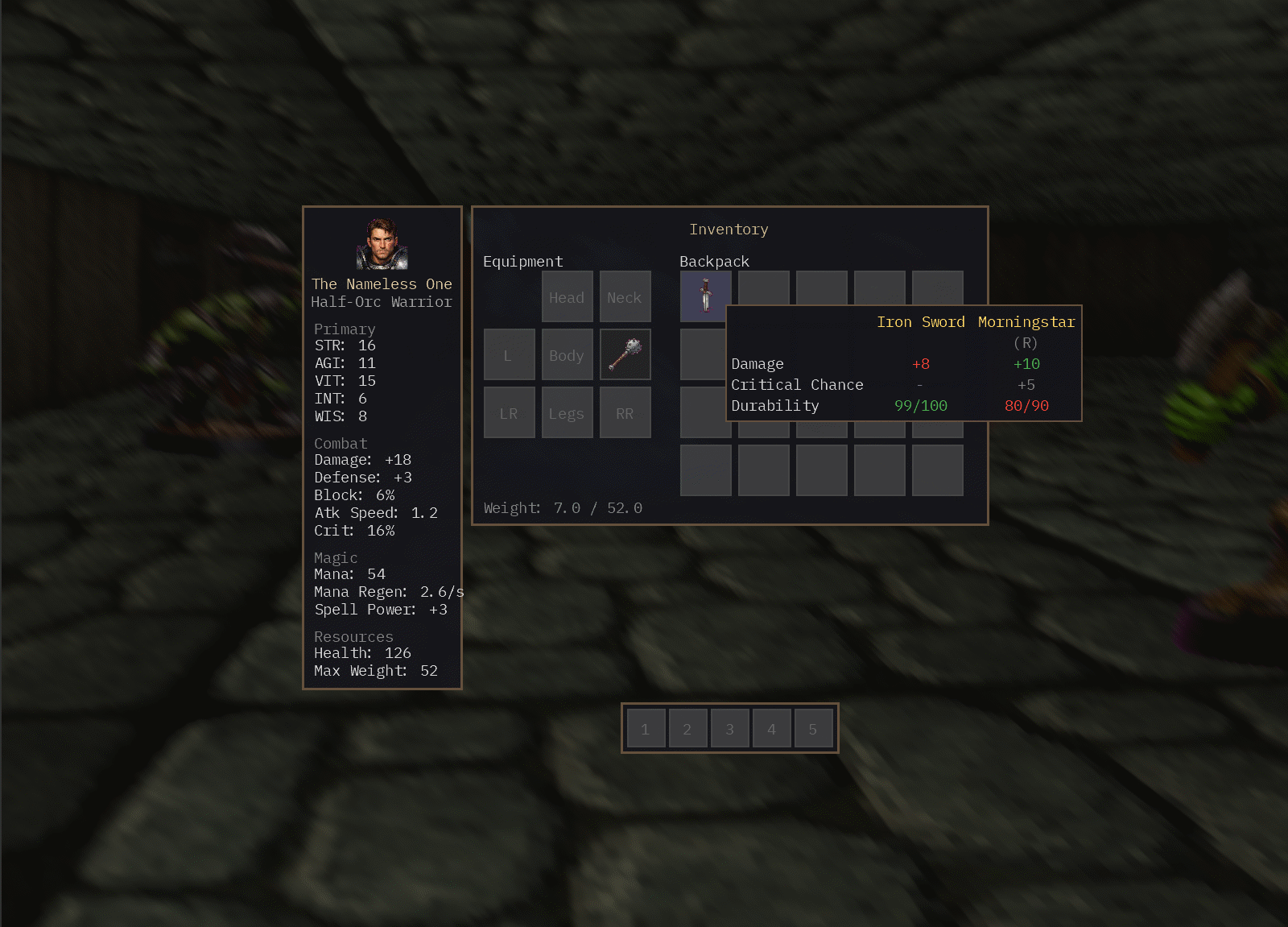
Tooltips now show durability as a fraction — current over maximum — and the comparison view lets you weigh durability alongside damage and defense when deciding whether a new drop is worth equipping.
Colors in the Dark
Not all loot is created equal. A rarity system now classifies items into four tiers: Normal, Magic, Rare, and Unique. Each tier gets its own color — white, blue, gold, and orange — visible in both the item name and the rarity label on tooltips.
It’s not just cosmetic. Rarity feeds directly into the durability system: better items last longer. A normal iron sword grinds down fast; a rare blade endures. The two systems interlock, making that flash of gold text on a new drop mean something beyond aesthetics.
The groundwork is laid for more rarity-driven mechanics — the Blacksmith skill is already in the code, waiting for vendors and repair anvils to give it purpose.